Education
.png)
With a content library, you can turn past work into repeatable, scalable assets that help you build itineraries faster and more consistently.

Every trip you’ve built is already a piece of intellectual property: the hotel descriptions you’ve refined over a dozen Italy honeymoons, the day-by-day structure you’ve perfected for East Africa safaris, the airport transfer copy that took you six tries to get right.
These assets are the fruits of many months of hard work. But if they’re buried in folders no one can access, they aren’t doing much to support your team, simplify day-to-day workflows, or improve trip consistency.
With a shared content library, you can turn past work into repeatable, scalable assets that help you build itineraries faster and more consistently.
A shared content library is a centralized, searchable repository of reusable trip components, such as day templates, hotel profiles, transfer descriptions, experience copy blocks—pretty much anything you’ve built for past itineraries that’s worth using again.
When all these assets are organized and stored in one place, it becomes a single source of truth your entire team can use to build itineraries faster, maintain consistency across client experiences, and onboard new advisors with minimal ramp-up.
Travefy’s content library is built for repeatability at scale so the work you’ve already done keeps working for you.
Watch our Getting Started Guide for an overview on how Travefy Library works.
Then, read this blog post to learn how to build, organize, and scale a shared travel database that supports your entire agency.

You don’t need to start from scratch to build a travel database. Actually, the best way to create a shared library while saving time, reducing duplicate work, and ensuring consistency is to repurpose your existing itineraries.
Here’s how to build, organize, maintain, and scale a travel agency database:
Before you add anything to your library, it helps to know what content you’re already working with.
Start by listing every recurring trip type your agency sells, like:
Then, look across these trips to find components that show up again and again, such as:
The goal of the audit isn’t to create a perfect taxonomy from the ground up. Instead, you want to pinpoint the most-used components from your individual itineraries and bring them together in one organized place where they can easily be searched, updated, and reused across future trips.
This way, you don’t have to build a brand-new travel database from nothing; you’re just assembling the parts you’ve already built over the years.
A truly useful content library is more than a collection of itineraries. It’s a living, breathing system made up of flexible, reusable content blocks you can pick and choose to build new trips without starting from scratch.
Think of it this way: A 10-day Italy honeymoon itinerary isn’t one reusable asset. It’s 10 or 15 separate assets, compiled together in one trip:
Each part of the trip is its own building block that can be reused again and again in different configurations to build entirely new customized itineraries.
By breaking down existing itineraries into reusable building blocks, you can turn a list of 50 itineraries into a scalable library of 500+ individual components. This way, building a new trip becomes a rinse-and-repeat assembly process: You simply select and combine already proven components.
Travefy’s drag-and-drop builder makes assembling these components into a new itinerary fast and intuitive:
Watch the video to learn how to build new trips from your existing content library with Travefy.
Building a reusable content library can be a high-impact move for your agency. But even when leveraging existing materials, getting started can still feel time-consuming.
The Travefy Marketplace speeds things up by giving you instant access to a collection of pre-built trip components, day templates, and even full itineraries from other Travefy users—expert travel advisors who’ve already done the work for you in the same destinations you’re selling. And it's completely free for all Travefy users—no extra cost, no upgrades required.
Here’s how it works:
When you use Marketplace content, you’re not just copying generic material from a brochure. You're tapping into a living community of experienced travel advisors—people just like you—who share their tried-and-true itinerary components so everyone can do their best work. Then it's simply a matter of refining and tailoring what you find to match your brand and client needs.
For agencies building a library fast or advisors organizing a new-to-them destination, Marketplace provides a reliable starting point so you never have to start from scratch. And the best part? It's completely free for all Travefy users.
Watch our Getting Started Guide to learn how Marketplace works.
What’s the difference between a content library that saves time, speeds up proposals, and maintains consistent client experiences and a catch-all list of scattered itineraries?
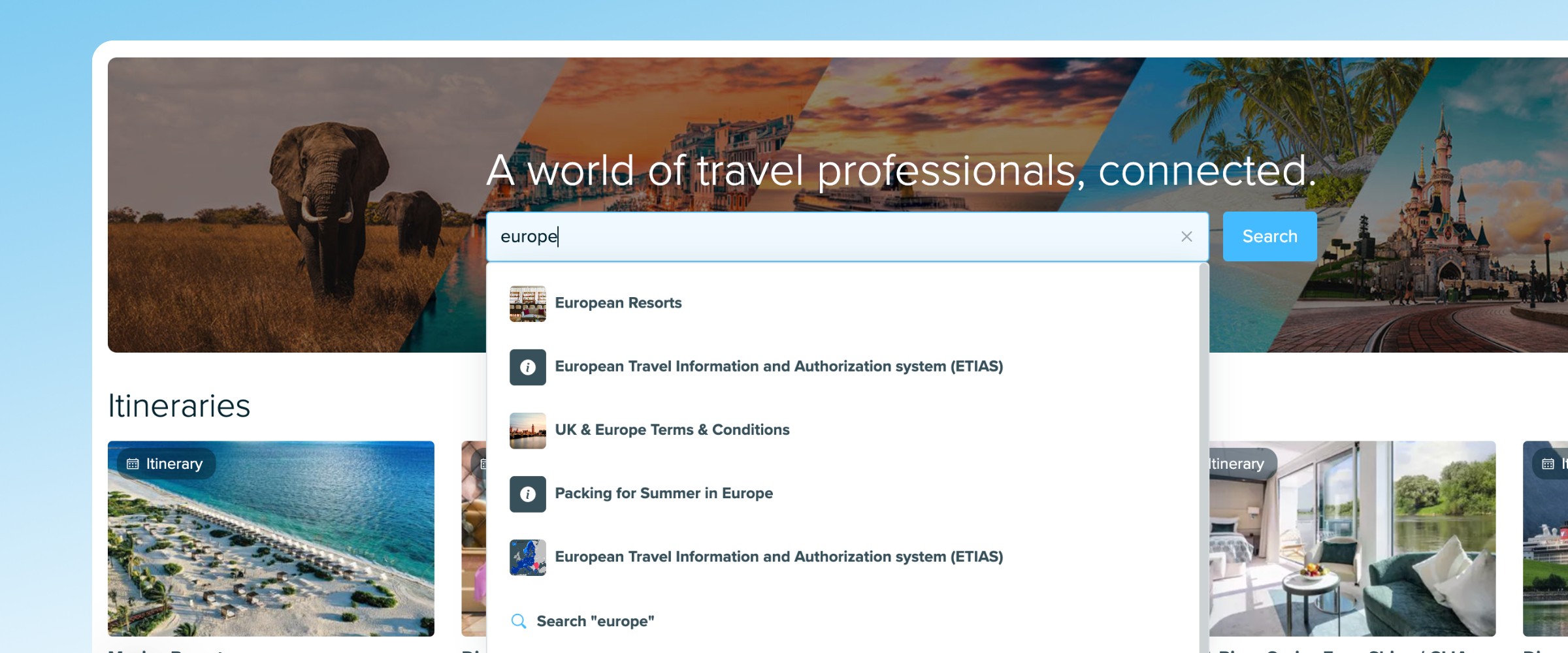
Searchability. And that searchability starts with consistent, well-defined labels.
Don’t wait until your content library gets too large and unwieldy to implement a labeling structure. From Day 1, create clear categories and apply them consistently for every itinerary and block.
Here’s a labeling structure that works for most agencies:
Suppose a new advisor joins your team and needs to design a luxury honeymoon itinerary in Southeast Asia. With a well-labeled, searchable library, they can quickly identify and pull relevant, pre-approved content to build a polished, client-ready itinerary in minutes—without interrupting teammates or pulling in senior advisors for guidance.
Watch the video for tips on how to organize and edit your content library.
Most agencies rely on static libraries made up of manually written descriptions. While these notes can be a helpful reference for trip-planning, they quickly become outdated and require ongoing (time-consuming) manual maintenance to stay useful.
Travefy's supplier integrations make it easy to refresh that content on demand. Rather than rewriting descriptions by hand, you can pull the latest supplier data directly into your library whenever you need it, keeping your content accurate and ready to support new itineraries, now and in the future.
For example, Travefy integrates with 200+ suppliers, including hotel chains, tour operators, transfer companies, and experience providers. When a supplier updates their content, you can do a fresh pull to bring in the latest information and save the updated version to your library. That means staying current is simple and efficient, with no need to manually rewrite descriptions from scratch.
When you build a shared content library of reusable building blocks, your whole agency can create itineraries more quickly, easily, and consistently. That means:
But your Library is only as good as the platform it lives in.
A shared folder in Google Drive, a spreadsheet of manually written descriptions, a Notes app full of hotel copy—none of these static systems give you automated supplier updates, intuitive itinerary-building, or permission-based workflows to support team collaboration at scale.
Travefy is the only travel software purpose-built for centralized, collaborative content management.
With direct supplier integrations, drag-and-drop itinerary-building, and role-based permission controls, Travefy helps travel advisors do more in less time with a composable, reusable content library that simplifies and scales itinerary creation.
Start your free trial to see how our shared content library helps 30,000+ travel brands build a smarter travel business.
No, you don't need to start from scratch. The best way to build your library is to repurpose the itineraries you've already created. The process starts with auditing your existing trips to identify the components that appear most often, like a hotel you always recommend or an airport transfer description you've refined over the years, and then centralizing those building blocks into one searchable library.
The Travefy Marketplace is a content-sharing network that gives you access to pre-built trip components, day templates, and full itineraries contributed by other Travefy users, as well as destination guides, curated cruise and hotel information, packing lists, travel tips, forms, and more from thousands of travel brands worldwide. You can search, preview, copy content into your own library, and customize it to fit your brand and clients. It's completely free for all Travefy users, with no extra cost or upgrades required.
Yes, Travefy's content library is built for team-wide collaboration. Your entire agency can access and work from a shared library of reusable trip components, with role-based permission controls that let the team admin determine who can edit library items. That means everyone on your team can use the same content, while you stay in control of what gets changed.
The key to a searchable library is applying consistent labels to every component from day one, before the library grows too large to organize retroactively. We recommend structuring your labels around destination, client type, season, or travel window, and component type so you can quickly filter or search by those labels whenever you need to pull content into a new trip.
Travefy's integrations with 200+ suppliers (including hotel chains, tour operators, transfer companies, and experience providers) allow you to pull the latest supplier data directly into your library on demand. When a supplier updates their content, you can run a fresh pull to bring in the latest information and save the updated version as a reusable template.
Join thousands of advisors who get our monthly newsletter filled with product releases, upcoming events, and industry highlights. Delivered straight to your inbox.